
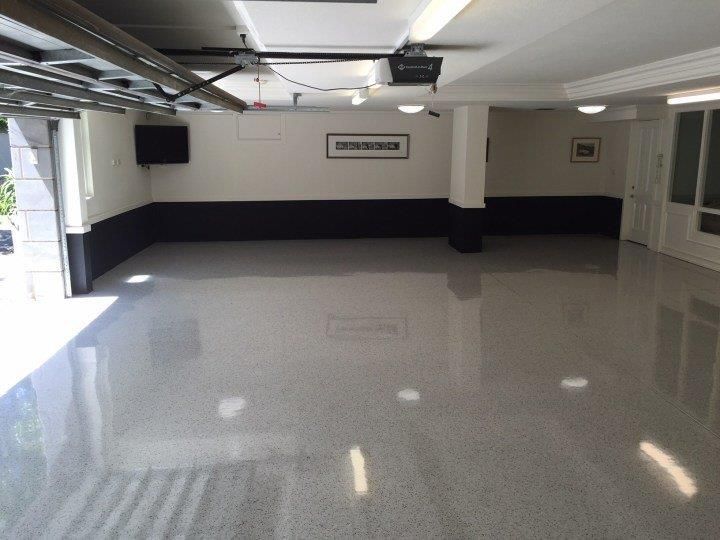
Garage is more than just a parking spot. It’s where you change tires, create functional art, & keep things up’n’running. So not only dads, but DIY enthusiasts also love to make the garage a safe haven. Your residential garage creates so much ease for you. It’s only fair to make this space as sturdy & long-lasting as possible — something which can be achieved with garage epoxy flooring.
“But why need epoxy flooring solutions in the first place?”… If such a thought has crossed your mind, you wouldn’t be the only one to do so. As a matter of fact, your garage’s flooring is typically made of concrete. Strong as it is, it’s designed to withstand heavy vehicular weight, temperature fluctuations, & impact of heavy dropped tools.
Though with time, you’ll understand why Ontario homeowners are investing heavily in improving the condition of their garage floor. To consider the versatility of this multi-purpose unit, you can already guess the damage your garage is exposed to. If left bare, the concrete’s porous properties can invite a range of damage, such as chemical stains, concrete expansion, pitting, cracking, shifting, & eventually, abrasion.
What Is Epoxy Flooring and How Does It Work?
Epoxy flooring refers to a heavy-duty, super-durable surface that is made from a mix of base resin & hardener. The combination triggers a chemical reaction that hardens the solution into a thick, sturdy, & solid plastic. Being tougher than regular paint, multiple layers of epoxy are applied over concrete garage floors while it’s still in liquid form.
Normally, people assume that nothing can bond well with concrete. It is primarily due to its porosity that epoxy penetrates deep into its surface & forms a strong bond with it. While this is the mechanism of the primer/base coat, the next coat features a thick layer of tinted epoxy. As it’s still wet, vinyl flakes are spread evenly over the epoxy flooring layer.
Considering how this step is used to add texture, disguise imperfections, & improve the floor’s slip resistance, it only makes sense that a final layer seals the deal for good. Lastly, a clear topcoat of either polyurethane or polyaspartic is applied to protect the garage floor against yellowing & hot-tire pickup.
Important Note:
None of this is possible without properly prepping the surface before installing garage epoxy flooring. So if your garage floor has a slick finish, a sealer, or old paint, it’ll keep the epoxy from penetrating the floor’s surface & forming a mechanical bond. For this reason, professionals grind the floor’s surface or use acid-etch techniques to roughen it.
6 Key Benefits of Epoxy Flooring for Residential Garages
The public wants one thing: ease. Combine this with a smart investment, and things start to look better for many. Instead of repeatedly paying the repairman to fix the same kind of deterioration, garage epoxy flooring offers a lasting solution. Beyond just addressing the problem head-on, saving you the trouble of unnecessary spending, & improving the aesthetics of your garage, epoxy flooring is also great for:
- Enhanced Durability for Daily Use: Creates a rigid surface to withstand daily wear, tire friction, & vehicular weight without chipping or cracking.
- Protection Against Stains and Chemical Spills: Provides lasting protection with a non-porous barrier to push harsh chemicals out & also prevent stains.
- Easier Cleaning and Maintenance: Keeps dust, dirt, & spills from penetrating into the bare concrete’s surface & makes routine cleaning easier (with just a quick sweep & occasional mop).
- Improved Appearance and Curb Appeal: Brightens up the space by reflecting light through customizable decor colour flakes & metallic finishes, enhancing the property’s resale value.
- Increased Resistance to Moisture: Prevents water, dampness, & spills from seeping through to the concrete, which consequently helps contain mold growth.
- Long-Term Concrete Floor Protection: Seals the slab against moisture, salt, & chemicals to avoid common issues such as spalling, pitting, & cracking (which would otherwise be prevalent with a bare concrete surface).
How Epoxy Flooring Improves Garage Functionality
If your garage has been the most neglected area of your home, now is the time to take action. With garage epoxy flooring, you get a drastic, much-needed upgrade that transforms it into a cleaner, brighter, & highly durable workspace. The seamless, chemical-resistant shield ensures that oil, road salt, & frequently dropped tools don’t mess with its aesthetic appeal or functionality. Not just that, but epoxy installation also helps in:
- Creating a Cleaner Storage Space
- Supporting Home Workshops
- Making Multi-Purpose Garages More Practical
- Enhancing Home Organization Efforts
- Improving Overall Usability of the Garage
Why Epoxy Flooring Is Popular Among Ontario Homeowners
Living in Ontario means preparing your home for everything, whether it’s a snowy winter season, road salt exposure to damp springs, or fluctuating temperatures. While these seasonal changes may seem harmless, they pose structural risks to bare concrete surfaces. Over time, moisture intrusion, salt damage, & repeated freeze-thaw cycles speed up cracking, which deteriorates the surface & results in costly repairs.
For this reason, more homeowners are turning towards garage epoxy flooring as a lasting solution. Instead of waiting for visible signs of wear to appear, epoxy coatings help protect the garage floor before damage occurs. It helps improve appearance while acting as a long-term barrier against seasonal issues that Ontario properties encounter throughout the year.
Professional Epoxy Flooring vs DIY Garage Floor Kits
| Aspect | Professional Epoxy Flooring | DIY Garage Floor Kits |
| Material Quality | Features professional-grade epoxy & UV-resistant topcoats. | Uses consumer-grade, water-based epoxy that turns yellow & stains easily. |
| Surface Prep | Utilizes industrial grinding techniques to open pores to form permanent chemical bonds. | Relies on mild acid etching, resulting in weak adhesion & bubbling. |
| Coating Thickness | 15 to 30 mils thick (uses high-solids industrial resins). | 3 to 5 mils thick (uses low-solids that evaporate as they cure). |
| Lifespan | 10 to 20+ years | 2 to 5 years |
| Cost | Reasonably high cost (upfront), low cost (long-term). | Low cost (upfront), high cost (long-term). |
| Application Time | 1 to 3 days. | 2 to 7 days. |
Get More Information on How You Can Use Epoxy Flooring for Your Home’s Garage!
Just like any vehicle, your home is made up of countless moving parts, & maintaining each one requires a thoughtful investment. The same goes for your garage floor. While bare concrete may seem strong enough on its own, prolonged exposure to moisture, chemicals, road salt, & daily traffic slowly wears away its rigid structure, layer by layer.
For this reason, homeowners are doing smart work & choosing preventative solutions that preserve the integrity of their garages from the very beginning. Having established that, a professionally installed epoxy floor does more than improve appearances. It creates a cleaner, brighter, & easier-to-maintain environment while protecting the underlying concrete for years to come.
- Shields the floor from moisture, road salt, & stains.
- Makes cleaning easier & minimizes the need for recurring repairs.
- Combines durability with practicality to deliver long-term value.
Bite Epoxy doesn’t do temporary fixes. Here, we understand what strong, lasting flooring can do for your home. Whether you’re upgrading an old, damaged garage floor or protecting a newly built space, our team delivers professional garage epoxy flooring systems, designed to withstand everyday use while enhancing the overall appearance & functionality of your home.
Frequently Asked Questions (FAQs)
Q1. Does an epoxy garage floor add value to a home?
A clean, durable, & professionally finished garage often contributes positively to a home’s overall appeal & resale value.
Q2. Is epoxy flooring good for homes in Canada?
Garage epoxy flooring works particularly great in Canadian climates because it helps protect garage floors from moisture, road salt, snow, & repeated freeze-thaw cycles.
Q3. Can epoxy flooring cover cracked garage floors?
It depends on the level of damage your garage’s concrete floor is experiencing. Minor cracks are fixable in a shorter time window, whereas larger cracks require additional prep before epoxy application.
Q4. What maintenance does epoxy garage flooring require?
A garage epoxy flooring doesn’t require much, as routine sweeping, occasional mopping, & prompt cleanup of spills are generally enough.