
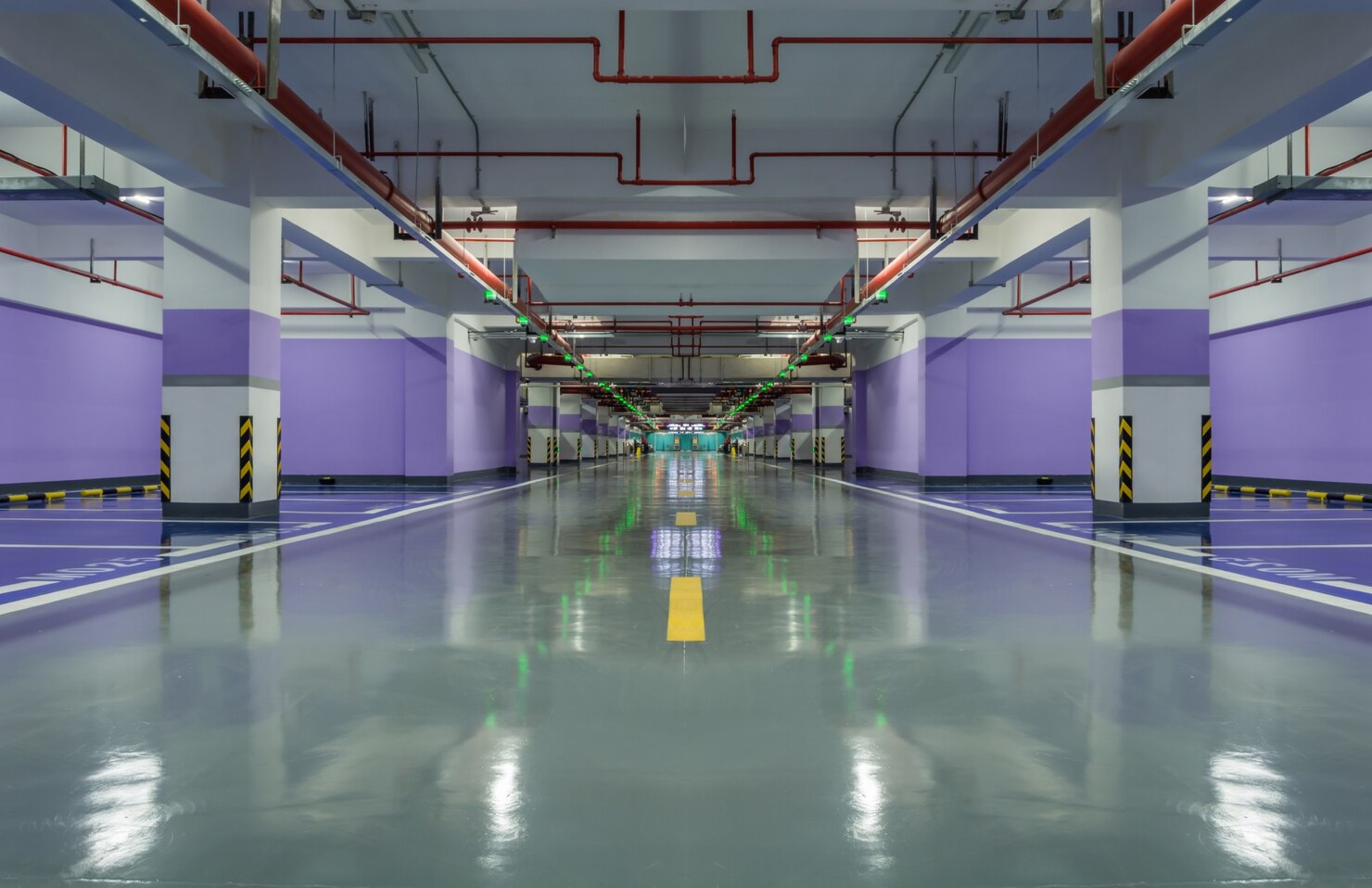
Garage and basement floors get less attention than the rest of a house yet they take rougher treatment. For example, the garage deals with tires, road salt, and dripping oil while the basement handles moisture, stored items, and foot traffic.
Over time, that wear can damage bare concrete which is porous and can crack, create dust, absorb stains, and weaken. An epoxy coating helps seal the concrete, giving the space a cleaner look and making the floor easier to clean and maintain.
With that protection in place, it’s worth exploring the other benefits epoxy can offer at home including the types of systems used in commercial epoxy flooring.
Why Garage and Basement Concrete Floors Need Protection
Concrete needs protection because it soaks up almost everything it comes into contact with and the damage builds up over the years. Vehicles, foot traffic, moisture, dirt, and road salt all wear the slab down. Inside a garage, for instance, tires drag in salt all winter long while oil and coolant can seep into the pores when a car is parked. Foot traffic then grinds that debris across the floor, which wears down the surface.
In the basement, though, the source of damage is different. Moisture can rise through the slab from below, and seasonal humidity keeps the concrete damp for weeks. As a result, spills sit longer, stains sink deeper, and fine concrete dust lifts from the surface. Over time, moisture and repeated temperature changes can widen existing hairline cracks.
6 Benefits of Epoxy Coating for Garage Floors
A coated garage floor withstands vehicle weight, oil spills, and winter salt. Here are 6 benefits homeowners notice first.
- The garage looks cleaner and more finished.
- The floor resists chipping and daily abrasion.
- Road salt and winter debris rinse away easily.
- The surface holds up under a parked car’s weight.
- A broom and mild soap handle most routine cleanups.
- Oil and automotive fluids wipe off instead of soaking in.
6 Benefits of Epoxy Coating for Basement Floors
A sealed basement floor helps block moisture, reduce dust, and handle daily wear making the space easier to use and maintain. For a basement, those benefits show up in 6 practical ways.
- The coating greatly reduces concrete dusting
- A mop handles most routine basement cleanups
- The space can serve as a home gym or playroom
- Spills are easier to wipe up without soaking into the coating
- Foot traffic and stored boxes are less likely to leave marks behind
- The slab underneath stays protected from everyday wear for years (usually lasts 10 to 20 years in a residential setting)
How Epoxy Coating Helps Protect Concrete From Common Residential Problems
Epoxy coating bonds to the slab and forms a solid layer, so wear, stains, and moisture affect the finish instead of the concrete. That barrier helps address 5 common problems found around the home.
- Surface wear and abrasion: Tires, shoes, and tracked-in sand wear the coating instead of the concrete underneath.
- Staining: Oil, paint, and household chemicals stay on the surface making them easier to wipe away.
- Concrete dusting: Sealing the pores helps reduce the fine concrete dust that settles on tools, shelves, and stored boxes.
- Minor surface imperfections: Grinding and crack repair before installation smooth out pitting, spalling, and small chips.
- Moisture-related surface exposure: A moisture barrier under the coating helps limit how much moisture reaches the finished floor.
Maintenance Benefits of Epoxy Coating for Garage and Basement Floors
Maintenance gets easier because a coated floor keeps dirt, dust, and spills on the surface which makes them easier to wipe away. That makes 5 everyday cleaning tasks easier.
- The smooth finish wipes clean easily
- The whole area stays cleaner and tidier
- Weekly cleaning takes less time and effort
- Dirt and spills wipe away without heavy scrubbing
- Concrete dust is less likely to settle on stored items
How Homeowners Can Get the Most From an Epoxy-Coated Floor
A coated floor needs only light, regular care to stay in good shape, and none of it requires special skill. In practice, a few simple habits can protect the finish and help keep the concrete underneath in good shape. These 5 habits cover the basics.
- Wipe up spills before they have time to sit
- Sweep loose grit away before it scratches the finish
- Avoid dropping heavy tools or jacks onto the surface.
- Follow the maintenance schedule your installer recommends.
- Watch for new cracks or damp patches near the walls so you can address them early.
Explore Professional Epoxy Coating Service & Decide for Yourself!
Protecting a garage or basement floor comes down to keeping wear, moisture, and stains from reaching the concrete. The result is a floor that is easier to clean, holds up better over time, and gives the space a more finished look.
Bite Epoxy serves homeowners across Durham and the GTA, from surface preparation to the final epoxy coating.
Ready to protect yours? Book your free estimate and get the floor sorted this season.
Frequently Asked Questions (FAQs)
Q1. Is epoxy coating worth it for a garage or basement floor?
Yes, for most homes, the long-term benefits can outweigh the upfront cost. It costs more than paint upfront, but it helps protect the slab from wear and damage that can become costly to repair. The benefits are especially noticeable in garages that see regular vehicle use and basements used every day.
Q2. Can epoxy be applied to a garage or basement floor with moisture, cracks, or other concrete problems?
Often, yes, but the concrete may need repairs first. Preparation may include grinding, filling cracks, and adding a moisture barrier to help the coating bond properly. Skipping that preparation can lead to peeling and other coating problems over time.
Q3. Will an epoxy-coated garage or basement floor hold up to cars, chemicals, stains, and everyday wear?
Yes, a properly installed epoxy floor can handle most of that everyday use. It resists automotive fluids, common household chemicals, vehicle weight, and everyday wear while making stains easier to clean. The bigger concern is a hard impact like dropping a heavy or sharp tool.
Q4. How long does an epoxy-coated garage or basement floor last, and what affects its lifespan?
A properly installed residential epoxy floor can last more than a decade with the right care. Good surface preparation matters most while moisture under the slab and daily traffic can also affect how long the coating lasts. Regular cleaning can help the coating last longer.