
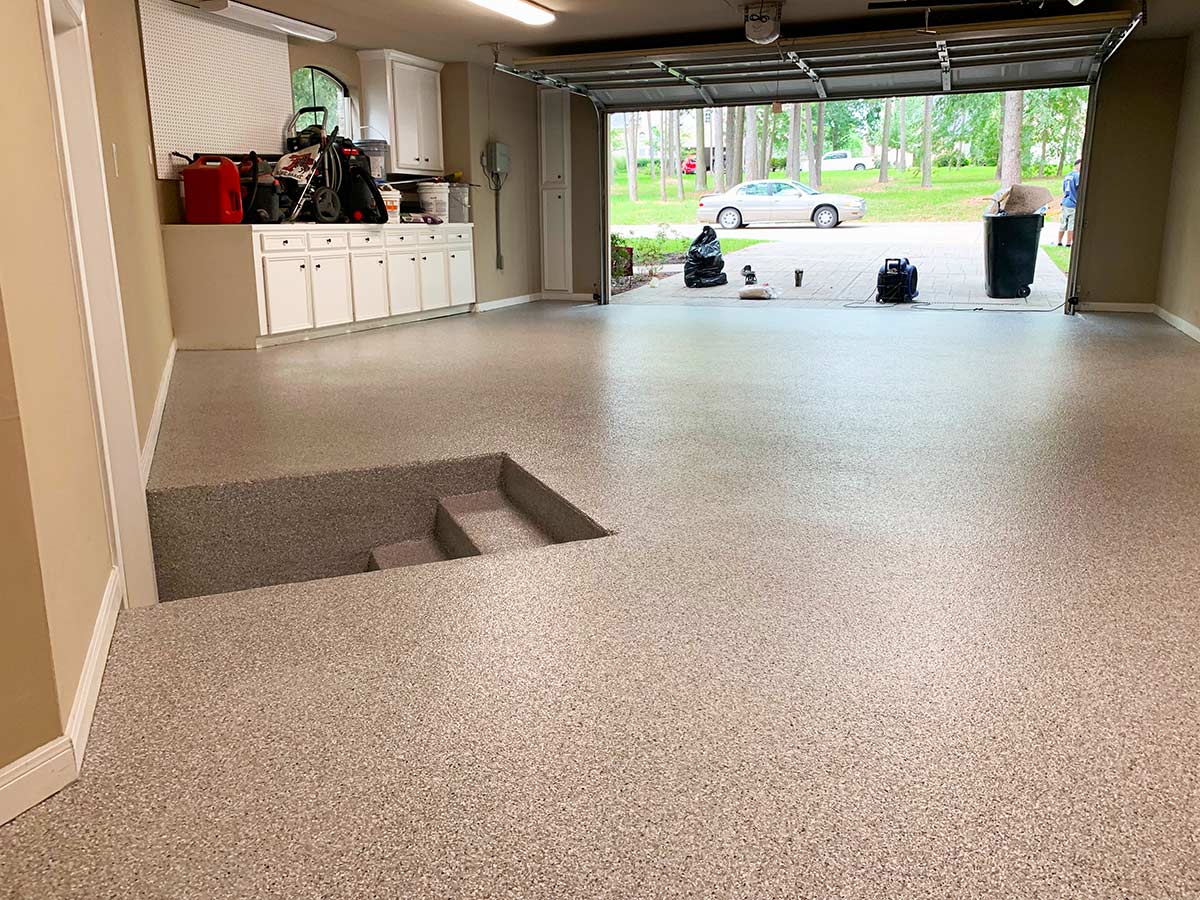
You probably don’t think about your garage floor much until it starts causing problems. Cracks spread, oily stains refuse to disappear, and fine concrete dust begins settling on everything around you. What was once easy to ignore suddenly becomes a daily frustration, leaving you wondering, “Is epoxy flooring worth it?”
It’s a fair question because epoxy is an investment, and you want to know what you’re actually getting for the money. You’re not simply adding a shiny layer of colour; you’re giving your concrete a tougher surface that can handle car tyres, dropped tools, spills, and everyday garage wear.
So, is it worth it? Maybe, but it depends on your garage. How often you use the space, the condition of your existing concrete, the look you want, how much maintenance you prefer, and how long you expect the flooring to last all play a part. Let’s look at what that investment can really offer.
What Makes Garage Epoxy Flooring an Investment?
Bare concrete may look harmless until oil seeps into it, road salt leaves marks, or moisture starts wearing the surface down. Because concrete is porous, these everyday garage messes can become harder to manage over time. That is where epoxy comes in, creating a sealed surface that helps protect the concrete.
Once the concrete has that protection, the garage becomes easier to use, too. A smoother floor gives you a better surface for parking, moving storage bins, rolling a toolbox, or working on a project. You can focus on what you really want to be doing, instead of always seeing rough spots or stains.
That smoother surface also makes cleaning less of a chore. Spills and dirt wipe off more easily, so you spend less time scrubbing. A clean, consistent finish can make the whole garage look more polished and cared for and give the space a more finished appearance, without losing the practical feel you actually want from it.
How Much Does Garage Epoxy Flooring Cost?
Every garage is different, so there is no one price for all garages. Different preparation methods & materials are required for each floor. The professional cost of epoxy flooring in Ontario is around $4 to $12 per square foot, and your actual quote will be based on the size, condition, and needs of your garage.
Those ranges are easier to understand when you consider what contractors must determine prior to installation. Several details can raise or lower the total cost, from the concrete beneath to the finishing you select; here are a few factors to consider:
- Garage floor size: The bigger the floor, the more materials and time it requires for the installation and the more it will cost.
- Existing concrete condition: Concrete may have cracks, spalling, or old paint, which will need additional preparation prior to coating. As the amount of work to prepare the concrete increases, so can your overall cost.
- Required repairs: If there are deep cracks or extensive damage, these may need to be repaired separately prior to epoxy. The additional repair steps result in additional labour and materials used in the final price.
- Surface preparation: Diamond grinding and other forms of surface preparation require time and equipment. Your installation cost may be more if the surface has to be prepared to an appropriate level for a good bond.
- Moisture conditions: If there is excess moisture or hydrostatic pressure, further moisture control measures may be necessary. These added steps can add an extra expense in the project because the floor must be adequately prepared prior to coating.
- Coating system and finish: If you’re looking for less expensive options, a simple solid colour system is likely the cheapest, while decorative flakes, metallic finishes, and improved coating systems are more expensive options. It is therefore possible to select a more detailed finish that will increase the final price.
- Complexity of the installation: Drains, tight corners, uneven slabs, etc. Garage configurations that are more complex generally require more labour and consequently higher cost.
What Determines Whether Garage Epoxy Flooring Is Worth the Cost?
There is no simple “yes” or “no” when it comes to epoxy flooring; the value depends on how your garage fits into your everyday life and what you expect from the space. To figure out whether the investment is right for you, start by looking at these questions:
- How often do you actually use your garage?
- Do you keep your vehicle parked inside regularly?
- What condition is your concrete floor in right now?
- Do you want to live in your home for a long time?
- Is your garage used for parking, storage, projects, or hobbies?
- Appearance and easy maintenance are important to you?
Garage Epoxy Flooring vs Leaving Concrete Untreated
| Factor | Epoxy Flooring | Untreated Concrete |
| Surface protection | Sealed against wear and moisture | Exposed and porous |
| Oil and stain resistance | Wipes clean, resists absorption | Stains soak in permanently |
| Cleaning | Quick wipe or sweep | Scrubbing rarely lifts stains |
| Appearance | Smooth, glossy, finished look | Dull, grey, often patchy |
| Maintenance | Minimal, occasional cleaning | Ongoing sealing and patching |
| Vehicle traffic | Handles daily parking well | Wears and cracks under load |
| Long-term floor protection | Extends your concrete’s lifespan | Deteriorates faster over time |
Garage Epoxy Flooring vs Other Flooring Options
There’s more than just epoxy to consider when thinking about upgrading a garage floor. You might also be considering garage tiles, concrete paint, or stain. While every option offers its own advantages, weighing factors like durability, maintenance, aesthetics, and garage functionality can help you determine which one suits your needs best.
Epoxy vs Bare Concrete
Bare concrete requires no new installation because it is already part of your garage, but that does not mean it costs nothing. Over time, stains, dust, moisture, and chemical spills can leave the surface looking worn. The following table compares the qualities of epoxy and bare concrete in everyday use:
| Factor | Epoxy | Bare Concrete |
| Durability | High, resists cracking and wear | Low, wears down over years |
| Stain resistance | Strong | Poor |
| Upfront cost | Moderate to high | None |
| Appearance | Polished, customizable finish | Grey, plain surface |
Epoxy vs Interlocking Garage Tiles
For a quick upgrade, an interlocking garage tile system can be installed over the current concrete system. They can cover up small issues, though they can move under strong loads or water can collect under them. When choosing between tiles and epoxy, the following comparison may aid you in determining which is best for your garage:
| Factor | Epoxy | Interlocking Tiles |
| Installation | Professional, seamless finish | DIY-friendly, snap-together |
| Durability under vehicles | Excellent | Moderate, can shift or crack |
| Moisture handling | Sealed surface | Can trap moisture beneath |
| Long-term cost | Higher upfront, lasts longer | Lower upfront, replaced sooner |
Epoxy vs Garage Floor Paint
Garage floor paint is a cost-effective solution for revitalizing a concrete floor that has become discoloured over time. It can add colour and enhance the appearance for a certain period of time, but it is not as durable as epoxy, particularly when used regularly for tyres. If you are considering both, the table below illustrates where each one stands:
| Factor | Epoxy | Floor Paint |
| Lifespan | 15+ years with proper prep | 1 to 3 years typically |
| Bond strength | Deep, mechanical bond | Surface-level only |
| Resistance to hot tyre pickup | Strong | Weak, prone to peeling |
| Cost over time | Better long-term value | Cheaper now, repeated cost later |
Epoxy vs Concrete Stain
If you want to add colour to the floor of your garage without losing the natural texture of concrete, concrete stain is for you. However, it does not provide the same protective layer as epoxy, so oil, road salt, and daily tyre wear can still affect the surface so, the table below compares both options:
| Factor | Epoxy | Concrete Stain |
| Protection level | Full surface seal | Colour only, minimal protection |
| Best use case | Daily-use garages | Decorative, low-traffic spaces |
| Maintenance | Low | Requires resealing over time |
| Vehicle traffic suitability | Built for it | Not recommended long-term |
Can Epoxy Flooring Reduce Garage Maintenance?
Yes, and that can be one of the most useful benefits of epoxy flooring. That means less time dealing with the small messes that can make a garage feel harder to maintain. Daily cleaning becomes easier because of:
- Easier removal of dirt and debris.
- Easier cleanup of automotive spills.
- Reduced concrete dusting.
- Simpler routine cleaning.
- Better protection against everyday wear.
Is Professional Garage Epoxy Installation Worth It?
Yes! If you are looking for a durable and efficient garage floor over the long haul, professional installation can be the wise decision. This begins with knowing what factors may impact concrete performance, such as moisture, cracking, and surface dusting, as noted by the National Research Council Canada. Keeping that in mind, here is what professional installation adds to the table:
- Proper concrete preparation: Diamond grinding of the concrete surface allows the coating to adhere properly and helps to reduce the risk of early peeling.
- Moisture assessment: Inspecting the concrete for moisture issues can prevent potential coating peeling and bubbling issues later.
- Crack and surface repair: Any existing cracks, pits, and damaged surfaces are repaired rather than just covered with coating.
- Appropriate coating selection: The installer can select a coating system according to the traffic, the moisture conditions, and the daily use of your garage.
- Consistent application: Even coating application prevents weak areas, uneven wear, and thin spots in the completed floor.
- Long-Term performance considerations: Properly installed coating can last for years if the surface is prepared properly and the coating is compatible with the garage environment.
Consult a Professional & Get More Information About Garage Epoxy Flooring!
At this point, you’ve noticed that epoxy flooring does more than just make your garage look nice. It can help you to save your concrete, make it easier to clean, and make it easier to use for years. Whether it is the right choice for you depends on your floor, your needs, and how you use the garage.
At Bite Epoxy, we install high-performance epoxy floors designed for Ontario garages. From winter road salt and moisture to daily vehicle traffic, our team considers the conditions your floor actually faces and helps you choose a system that fits your space.
Your garage is part of your home, and you should not have to keep putting up with stains, cracks, dust, or a floor you avoid looking at. So, reach out to Bite Epoxy today, get a clear recommendation for your garage, and take the first step.
Frequently Asked Questions (FAQs)
Q1. How long does garage epoxy flooring last?
A properly installed epoxy floor typically lasts 15 to 20 years, especially once the concrete gets diamond-ground and sealed with a UV-stable topcoat before application.
Q2. Can I install epoxy flooring over cracked concrete?
Cracks need to be filled and repaired first. Coating over damage without fixing it beforehand causes your new floor to crack again in the same spots.
Q3. Does epoxy flooring get slippery when wet?
A properly finished floor with decorative flakes or a textured topcoat stays slip-resistant, even when water, snowmelt, or oil ends up on the surface.
Q4. How soon can I park my car on a new epoxy floor?
Standard epoxy systems need 3 to 5 days to fully cure before vehicle traffic, while polyaspartic systems can often handle light traffic within 24 hours.