
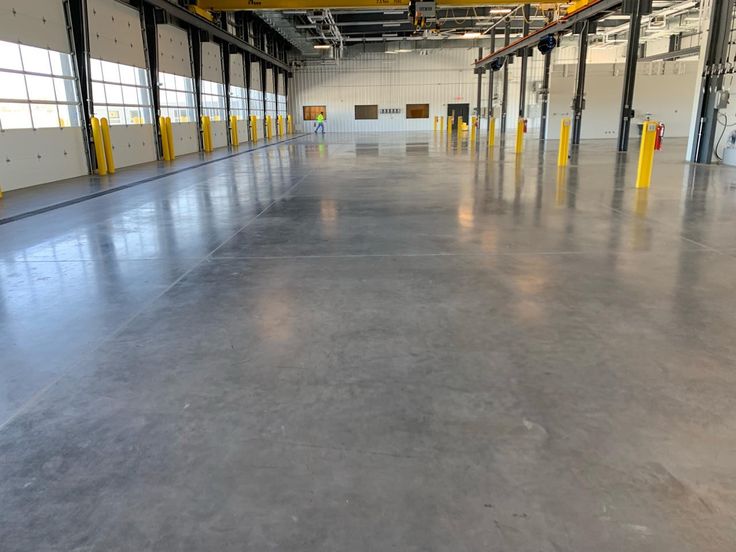
When you’re a frequent visitor to commercial areas, it’s not a surprise to see how big the crowd can get. Whether it’s a lavish showroom or a high-end restaurant, there’s more to the patter of shoes & the click-clack of heels. So, no matter how rhythmic the sound of footsteps, it always contributes to the erosion of unprotected, commercial concrete surfaces.
If you’re in charge of managing a commercial facility, then you’d know the damage of leaving out an epoxy coating. The surface is exposed to abrasion driven by friction from shoe soles, carts, & other heavy equipment. To make things worse, it also has grit, dirt, & dust to deal with. As these components act as ‘sandpaper’ on the concrete flooring, one may even expect the erosion of low-quality protective coatings.
Besides that, you also have moisture damage to worry about. Food, beverages, & oil spills seep into the porous, unsealed concrete surface, resulting in discoloration & further accelerating the concrete’s structural breakdown. Whether you’re in charge of a retail, corporate, or healthcare facility, you know one fact better than the rest. No one finds a commercial facility appealing without aesthetically & functionally appropriate flooring.
Why Commercial Concrete Floors Experience Wear Over Time
A space as profit-generating as a commercial one is never to be taken lightly. Every nook & cranny of the floor should be fine & free from all sorts of abrasion. However, with heavy foot traffic, maintaining its functionality & smoothness is a near-impossible task. But first, get this: the wear & tear of commercial concrete floors starts with dirt & debris acting as the primary accelerant.
That’s right, the abrasive nature of dirt & debris works best when there’s heavy foot traffic to damage the concrete. In this, soils, grit, & tracked-in salts get caught between shoe soles, cart wheels, & forklift tires. Through such a sandpaper effect, the concrete surface begins to get damaged, thanks to the consistent grind of aforementioned debris.
Not just that, but an increased susceptibility to moisture absorption also leads to physical & chemical deterioration of the surface. Wonder why? Well, the tracked-in salt & snowmelt in areas with harsh winters cause scaling & surface degradation. Over time, the floor dusts, cracks, & chips away — especially when there’s no reliable epoxy coating.
5 Common Signs of Foot Traffic Damage on Concrete Surfaces
A point was made when we said that heavy foot traffic damages concrete surfaces, especially when there’s no proper sealant protecting them. Ideally, one should assume that the concrete flooring in their commercial space requires attention. But some prefer to do their homework before ringing up professional epoxy coating installers. If you’re also one of them, here’s a list of subtle signs indicating floor damage.
- Surface Scratches and Scuff Marks: Thin, superficial lines or dark scuff marks are often a result of shoe soles, dragging objects, and/or abrasive dirt tracked indoors.
- Dulling and Loss of Surface Appearance: A gradual fading, loss of sheen, or a matte finish becomes prominent when foot traffic wears away the top layer of polish or the protective sealer.
- Dusting and Surface Breakdown: A powdery, chalky residue indicates that the cement paste is deteriorating & crumbling, leaving a sandy texture behind.
- Minor Cracks and Surface Imperfections: Micro-crazing that worsens over time under the pressure of constant foot traffic, allowing water to seep in.
- Uneven Wear in High-Traffic Areas: Dips where concrete has physically worn down deeper than the surrounding floor area, with the advanced stage exposing sand & rocks beneath.
Industries Most Affected by Heavy Foot Traffic
There are commercial areas dealing with a manageable ratio of customers, & there are also the ones with heavy foot traffic. Taking that into consideration, only a handful of industries are most affected by heavy foot traffic. Interestingly, these are also the ones with a higher rate of concrete flooring damage, a process accelerated by abrasive dirt, heavy machinery, & moisture seepage.
- Retail Stores
- Showrooms
- Restaurants and Hospitality Facilities
- Medical Clinics
- Office Buildings
- Warehouses With Mixed Foot and Equipment Traffic
5 Ways Surface Damage Impacts Commercial Operations
One might think that surface damage is only something that compromises the experience of the customer. While it’s true, the impact goes deeper than that. Progressive damage to the floor prompts managers to shut down the affected section of the facility & halt operations until the repair process ends. To tell the truth, this only scratches the surface of operational & financial hurdles.
- Reduced Professional Appearance: The wear & tear visually devalues your facility, making the space look neglected & unregulated by responsible authorities.
- Increased Maintenance Requirements: Damage rarely remains the same when no efforts are made to address it, which can lead to visible surface cracks that trap dirt, moisture, & bacteria.
- Potential Safety Concerns: Cracked, raised, or slippery surfaces pose significant physical hazards to customers/visitors/employees, increasing the risk of trips, slips, & falls.
- Higher Long-Term Repair Costs: Leaving small cracks ignored for a long time can easily damage the subfloor, which may require a complete floor replacement.
- Negative Customer Impressions: Customers & clients love to see a well-maintained environment that feels good & smells good too — but a damaged floor compromises that impression.
How Businesses Can Help Protect High-Traffic Concrete Floors
When it comes to solutions, there are several ways businesses can protect their concrete floors despite the heavy foot traffic. Instead of a one-stop solution, a combination of approaches could work well together to deliver the finest results. To start with, one should focus on routine surface cleaning. Considering how damaging dormant debris particles can be to a concrete surface, regular cleaning becomes an unavoidable necessity.
The next step is to get cracks & surfaces fixed promptly upon noticing signs of damage. You or flooring experts can go for polyurea joint fillers to make the floor last longer. This way, you’ll know that the surface beneath is polished & filled to apply protective layers of epoxy coating. For most commercial spaces, it’s a cost-effective solution that creates a seamless, durable, & perfectly walkable surface for consumers & employees alike.
Why Epoxy Coating Is Commonly Used in High-Traffic Commercial Environments
It’s undeniable that a highly effective solution is the most common & popular among those who can benefit from it. The same is true for high-traffic commercial environments, where concrete flooring is almost always at risk of chipping, scratching, & mold-driven decay. But fortunately, you have the lasting advantages of epoxy coating to work with.
- Improved Surface Durability: Epoxy reinforces the structural integrity of the base concrete, increases its load-bearing capacity, & prevents cracks.
- Resistance to Abrasion and Wear: Cured polymer structure (of the epoxy) withstands the pressure from constant foot traffic, heavy machinery movement, & forklifts/carts without peeling or wearing down.
- Easier Cleaning and Maintenance: The non-porous, seamless quality of epoxy coating keeps liquids, dirt, & debris from penetrating the concrete below — making the surface easily wipeable.
- Enhanced Professional Appearance: A high-gloss finish from the protective layers brightens the spaces that felt unappealing & uninteresting before — which is also customizable with colors & decorative flakes.
- Long-Term Floor Protection Benefits: The lifespan of the porous concrete flooring is significantly extended as the epoxy layers protect it from moisture infiltration & chemical spills.
Explore How Epoxy Coating Can Help Businesses with Concrete Surface Problems!
It can get quite frustrating to manage a commercial facility on your own. Considering how every decision has to be calculated here, you can’t afford to take risks with its infrastructure. Not only would neglecting damaged flooring adversely affect your customers’/visitors’ perception, but the same will also happen for the business’s profitability. So, to avoid this, it’s high time you considered an epoxy coating for your concrete surface problems.
- Addresses sanitary & chemical vulnerabilities.
- Strengthens the floor & offers a highly resistant protection against abrasion.
- Conceals minor cracks & elevates the commercial space’s aesthetics.
Bite Epoxy is a trusted provider of high-performance epoxy floor coatings for both commercial & residential spaces in the Greater Toronto Area. Here, our team understands the degree of damage that foot traffic can do to bare or poorly coated concrete flooring. For this reason, we offer durable, slip-resistant, & easy to clean options to our valuable clients.
Frequently Asked Questions (FAQs)
Q1. Can damaged concrete floors be repaired before coating?
Yes, it’s an ideal practice to repair the damage in concrete floors before the application of a protective coating. If one remains negligent of this step, it’s likely that the coating would peel, bubble, & lack functionality.
Q2. How often should commercial concrete floors be inspected?
It is recommended to inspect the concrete floors of your commercial facility at least once or twice a year, though this frequency may vary depending on the intensity of foot traffic.
Q3. How long should a concrete floor last?
A bare concrete floor in commercial facilities will typically wear out within 3 to 5 years, whereas epoxy flooring solutions can extend its longevity by a further 5 to 15 years.
Q4. What are the first signs of concrete floor wear?
Some of the initial signs of concrete floor damage include spalling, chipping, pitting, surface dusting, darkened spots, increased absorption, & a loss of sheen.